Jul 3, 2026
AI Coding Control Is Moving From Prompts to Guardrails and Evidence
AI Coding Control Is Moving From Prompts to Guardrails and Evidence frames AI coding as an operational workflow that needs proof, scope, routing, and review around the agent.

AI coding control is shifting away from better prompts and toward operational guardrails. The important question is no longer whether an agent can act, but how the user proves what it did and where it was allowed to act.
Summaries are claims, not proof
A user wiring Claude to brokerage execution, another warning that agent summaries are not changelogs, and a stress test hitting model fallback and weekly limits all describe the same missing layer.
The signal is specific: The row combines MCP-connected execution, unmentioned file edits, classifier fallback, budget burn, and CLAUDE.md carrying too much hidden workflow control. Developers are not only asking for stronger models. They are asking for an operating layer around model work: scope, evidence, review, routing, and recovery.
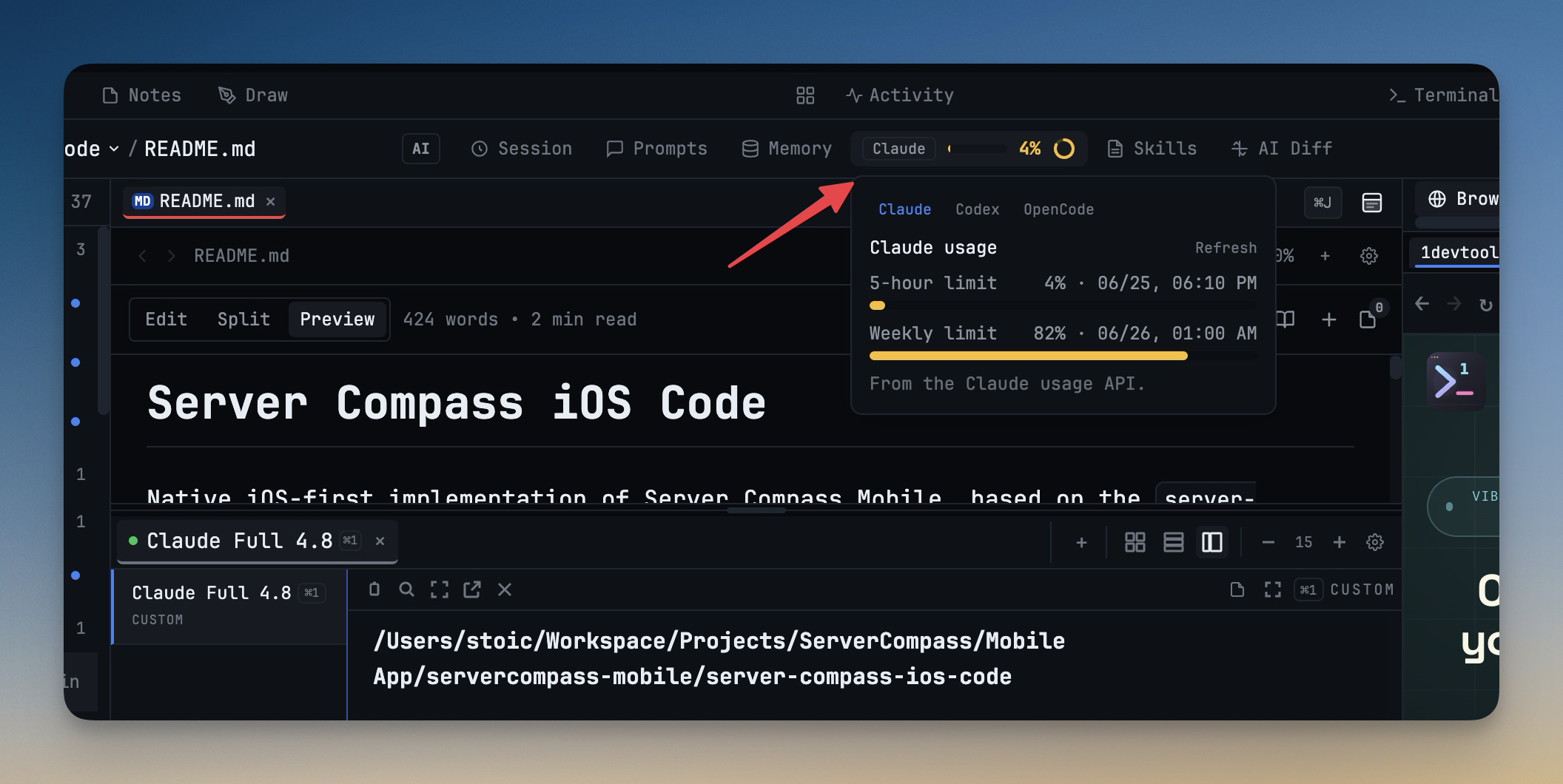 Budget and usage visibility belong beside guardrails because agent runs fail operationally as well as technically.
The asset is not decorative. AI coding work needs visible operating surfaces because the important failures happen between prompts: which command ran, which model acted, which file changed, and which human approval turned a result into shippable work.
High-stakes agents need explicit scopes
A developer control surface should show permission scopes, touched files, command output, diffs, tests, and model changes. It should make the evidence harder to lose than the summary.
The useful interface is not another chat transcript. It is a run surface that keeps plans, commands, diffs, screenshots, logs, test output, and human approvals attached to the task while the agent works.
That record also makes model comparisons less theatrical. If a team can see the route, the evidence, and the handoff, it can judge a workflow by operational quality instead of by a single impressive answer.
Boundaries are how agents become usable
High-stakes workflows need explicit blast-radius limits. The agent should know which operations require approval and the user should see that boundary before execution.
Without boundaries, every successful run still leaves a question: what else changed? A mature workflow makes file scope, command permissions, model choices, and approval gates visible before the result reaches production.
Evidence should travel with the work
Cost-aware routing belongs in the same surface because limits change behavior. When models fall back or budgets tighten, the run needs to show how that affected decisions.
The next agent, reviewer, or maintainer should not have to reconstruct the session from memory. A compact trail of decisions and verification is what lets AI-assisted work survive handoff.
The control layer is becoming the product
The next control layer around coding agents will look less like a prompt library and more like an operations console.
Raw model quality will keep improving, but production trust depends on the layer around the model. Developers need to see what happened, why it happened, and where human judgment still belongs.