Reopen Closed Terminals
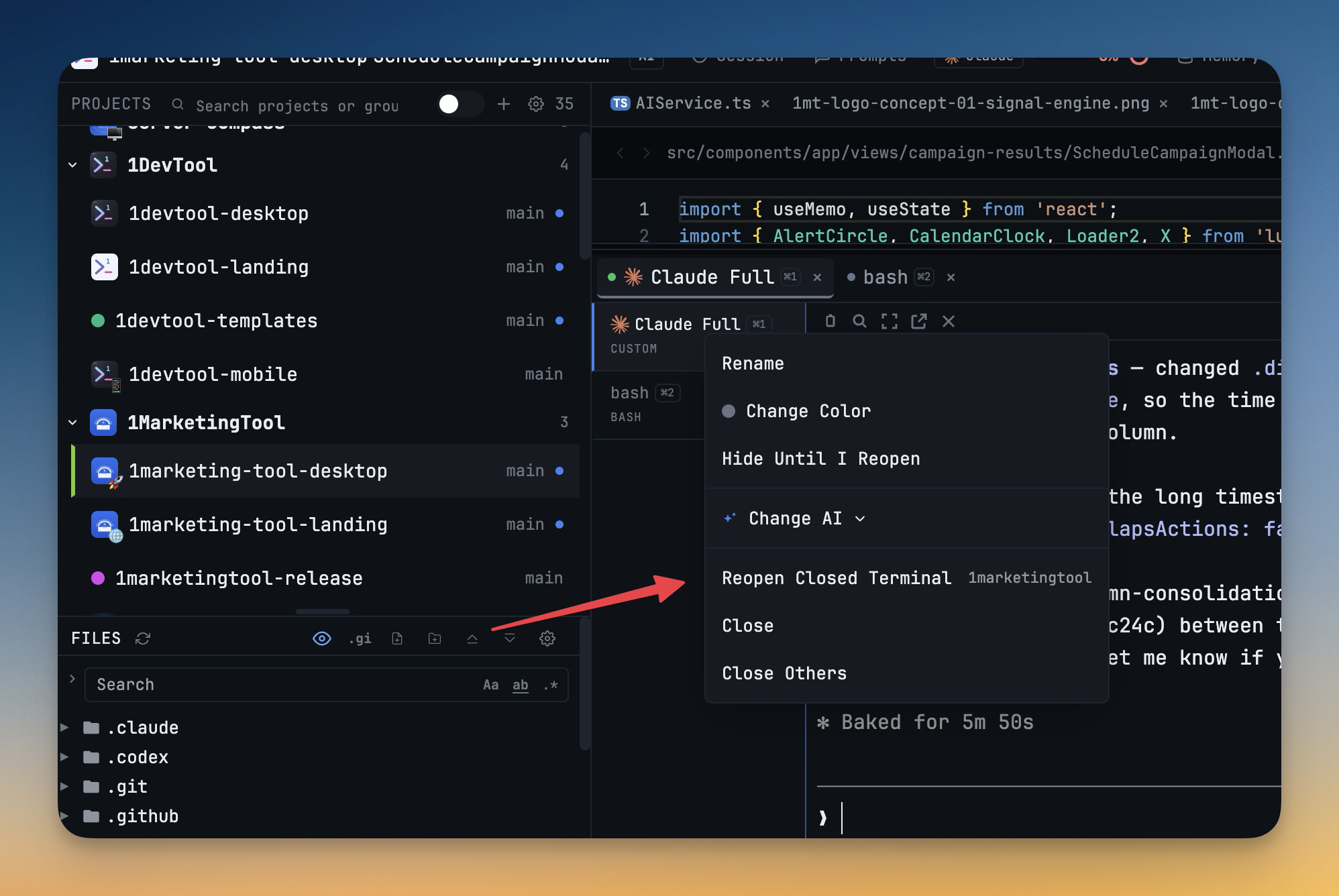
Restore recently closed terminal tabs from the terminal menu, including their name, command, color, working folder, worktree binding, and AI resume details.
Why You Need This
How this feature boosts your daily productivity
Closing the wrong terminal should not turn into a setup ritual. 1DevTool keeps a per-project last-closed history so you can reopen terminals in last-closed order and return to the right working context quickly.
How It Works
Get started in 4 simple steps
Open a Terminal
Click "+" to create a new terminal tab. Choose from Claude Code, Codex, Gemini CLI, Amp, bash, zsh, or custom shells.
Arrange Your Layout
Switch between grid, columns, or fullscreen with one click. Drag dividers to resize panes to your preference.
Run Your Agents
Start your AI agents with pre-configured prompts or type freely. Watch them work in real-time with status indicators.
Monitor & Manage
Use the Terminal Dashboard for a bird's-eye view. Sessions persist across restarts so you never lose context.
Without 1DevTool
The manual way vs. the 1DevTool way
The Hard Way
The 1DevTool Way
How it compares
Closing the wrong terminal usually means opening a new one and setting it up again, unless the app has a short undo window.
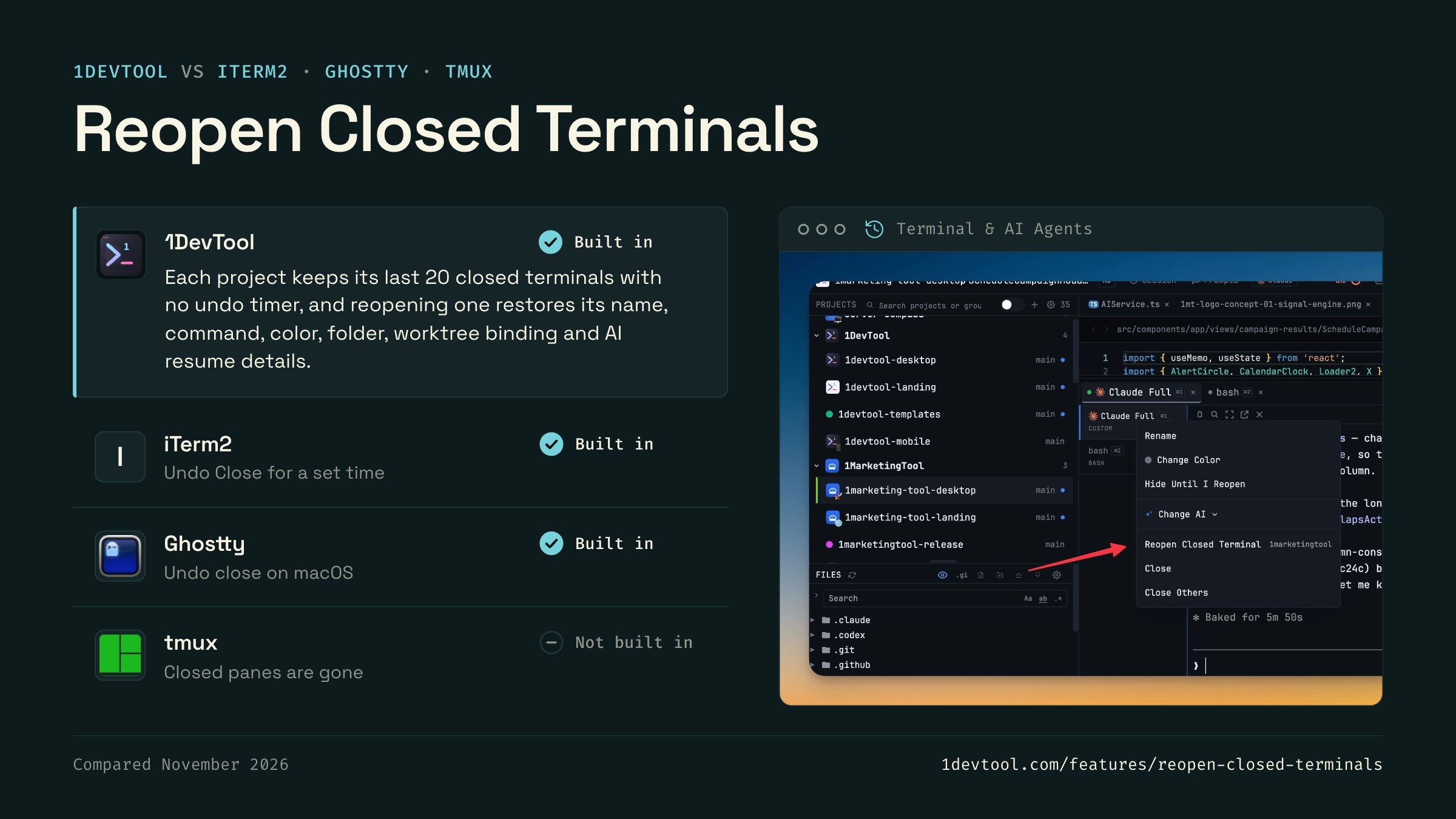
 1DevToolBuilt inBuilt in
Each project keeps its last 20 closed terminals with no undo timer, and reopening one restores its name, command, color, folder, worktree binding and AI resume details.
- iTerm2Built inBuilt in
iTerm2 can undo closing a session for a number of seconds you set in its settings, bringing the session back.
- Built in
On macOS, Ghostty can undo closing a window, tab or split, including with ⌘⇧T, for a short time after you close it.
- Not built in
Killing a tmux pane ends its process. Plugins such as tmux-resurrect restore saved layouts, not a pane you just closed.


Checked November 2026 against each app's public docs. These products change quickly. If a row is out of date, tell us at feedback.stoicsoft.com/1devtool.
Key Capabilities
Everything included with Reopen Closed Terminals
Why It Matters
The productivity impact of having terminal & ai agents built into your workspace
Zero Context Switching
All your AI agents and terminals live in one window. No more alt-tabbing between 5 different terminal apps.
Visual Status Tracking
Color-coded tabs and the Kanban dashboard tell you which agents are done, running, or need attention — at a glance.
Persistent Sessions
Tmux-backed persistence means your terminal state survives crashes and restarts. Never lose scrollback history again.
Flexible Arrangements
One-click layouts adapt to your task: grid for monitoring, columns for comparing, fullscreen for deep focus.
More in Terminal & AI Agents
Other features in this category you might find useful
Multi-Agent Terminals
Run Claude Code, Codex, Gemini CLI, Amp, OpenCode, Qwen, and custom AI commands in dedicated terminal tabs with recognizable agent logos, custom colors, and status indicators.
Flexible Terminal Layouts
View terminals in 2×2 grid, side-by-side columns, or single fullscreen mode with resizable panes.
Terminal Dashboard
Kanban-style board view of all terminal statuses — Idle, Running, and Review — with real-time polling.
Session Persistence
Terminal sessions persist across app restarts with full scrollback history via tmux integration.
Ready to boost your workflow?
Download 1DevTool for free and experience Reopen Closed Terminals along with 347 other features — all in one app.