Agent Input
A proper text box for writing prompts — floating, resizable, with drafts, mentions, attachments, and a verified send.
AI agents run inside full-screen terminal interfaces (TUIs) that take over the keyboard. Inside one, ordinary text editing — cursor keys, select-all, paste, multi-line — behaves unpredictably. Agent Input gives you a real text box outside the terminal, and delivers what you wrote into the agent.
Press Cmd+I on macOS, or Ctrl+Alt+I on Windows and Linux.
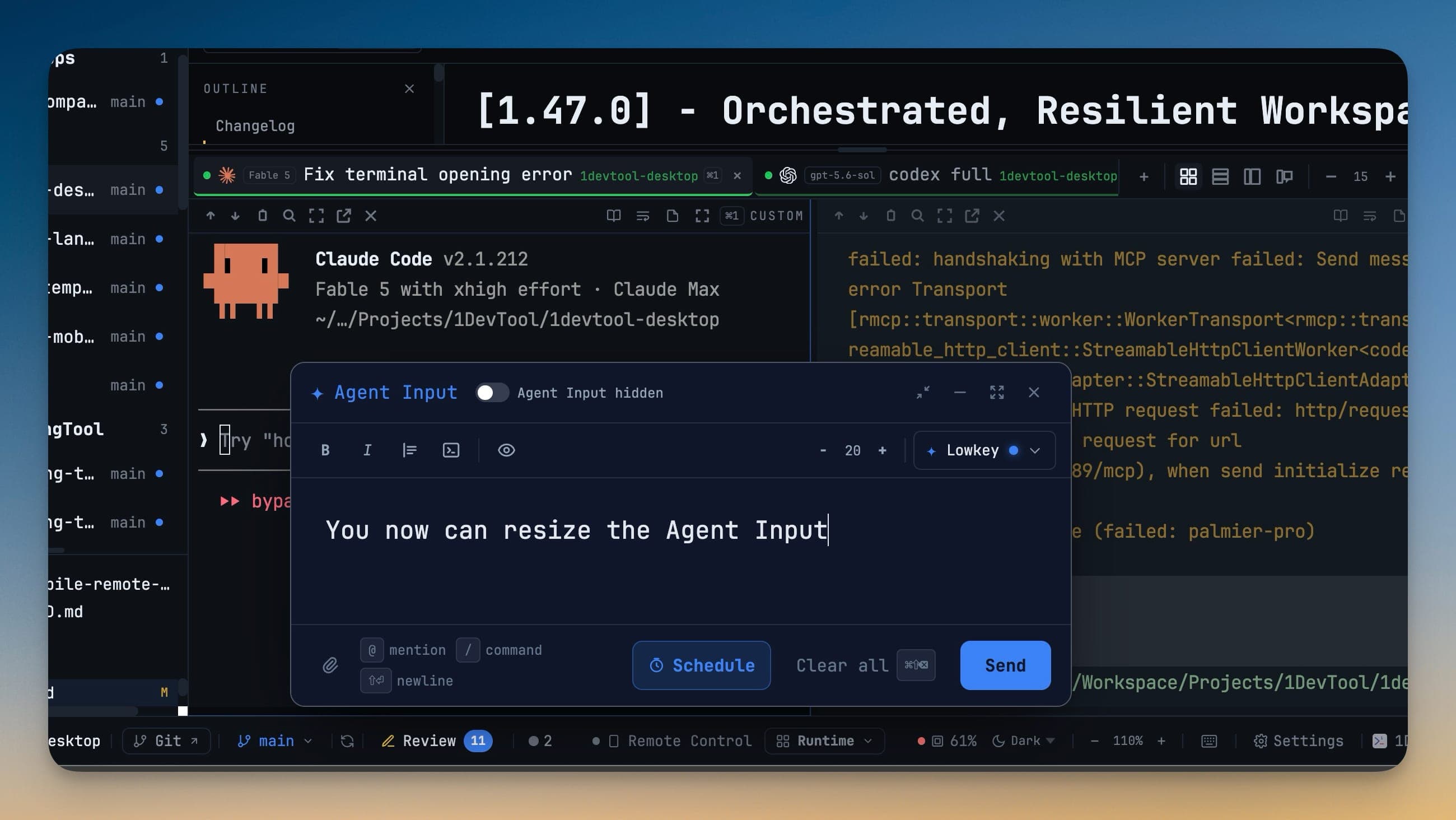
Floating and resizable
Detach the composer and put it wherever you want: drag it around the window, resize it from any edge or corner. It floats automatically when the terminal pane is too narrow to hold it comfortably, and your preferred size is remembered between sessions.
When the composer is hidden, a compact button in the terminal corner shows the current shortcut — with a dot when an unsent draft is waiting.
Drafts are never lost
Text you typed stays yours. Switch terminals, close the composer, restart — the draft comes back, with your cursor where you left it, and attachments return as chips. The terminal tab shows a small badge previewing an unsent draft so you do not forget it is there.
Opening the composer does not read your clipboard or prefill from it, and multi-line terminal pastes are not silently redirected into it.
Mentions
Type @ to open the picker:
- Files — insert a path from your project
- Agents — delegate to an agent, with a drill-in model picker
- Terminals — deliver this prompt into a linked terminal that is already open
- Templates — insert one of your prompt templates at the cursor
- Skills — insert a skill or slash command; see Skills & Slash Commands
- Projects — hand your agent the context of a sibling repo in the same workspace, without leaving the terminal you are in
You can also drag a file, folder, or project from the sidebar into the composer to get its path.
Choosing an orchestration pattern
A mode control beside the composer decides what happens when you send: Auto / Team / Swarm / Pipeline / Off.
Auto reads what you are typing and applies the right pattern, then tells you why — Using Pipeline · you wrote "then". When it is not sure, it says so and asks you to pick rather than guessing.
Clicking any other mode is a lock. It stays put no matter what you type next, until you choose Auto again — and a choice you already made is kept as a lock, so nothing changes underneath you.
The ? beside the control opens the Pattern Guide: Team, Swarm, Hierarchy, Pipeline and Mesh side by side, with the one verb that separates each from the others.
Saved charts appear here too — picking a hierarchy preset applies and activates it from that one click.
Attachments
Attach an image and it travels with the prompt. From the phone you can attach a photo straight from the camera roll — see Remote Control.
A verified send
After Send, 1DevTool checks the agent's composer to confirm the message actually left it. If the text is provably still sitting there, one more Enter is attempted automatically.
If it still has not gone, the terminal says so rather than reporting a run that never started: Mission Control shows "not submitted — press Enter" and takes you to the terminal, and the tab keeps your text as a draft. Pressing Enter yourself clears the warning.
Starting the run, auto-naming the tab, and opening an AI Diff session all wait until the prompt is proven sent — so a delegation can never look live while the agent sits idle.
Scheduled prompts
Set a prompt to send later. Choose how it fires:
- Timer — after a duration you set.
- At time — at a clock time today or tomorrow.
- AI reset — a few minutes after the terminal's AI quota window resets. The buffer is adjustable, with a two-minute minimum, because sending the instant a window reopens can error out.
The desktop owns the clock, so a scheduled prompt fires whether or not your phone is awake.
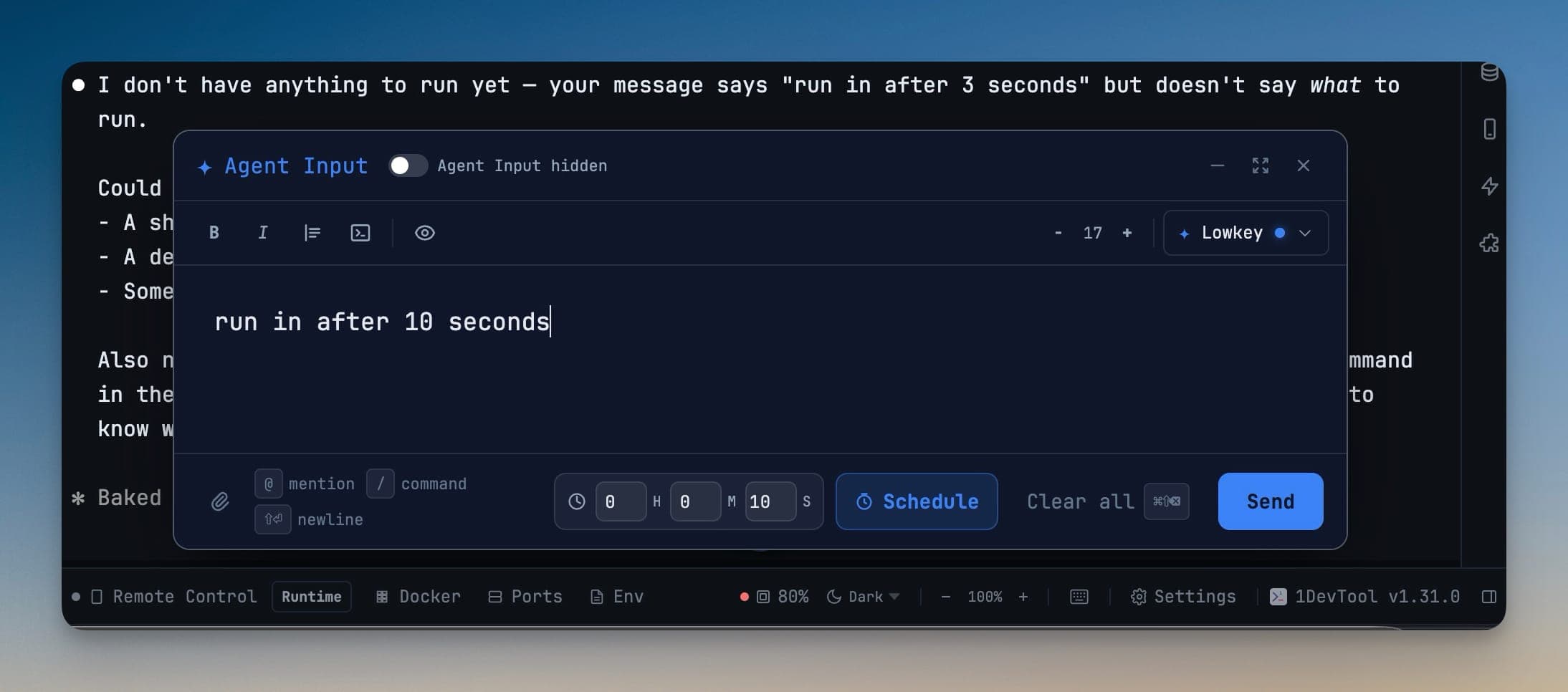
A queue per terminal
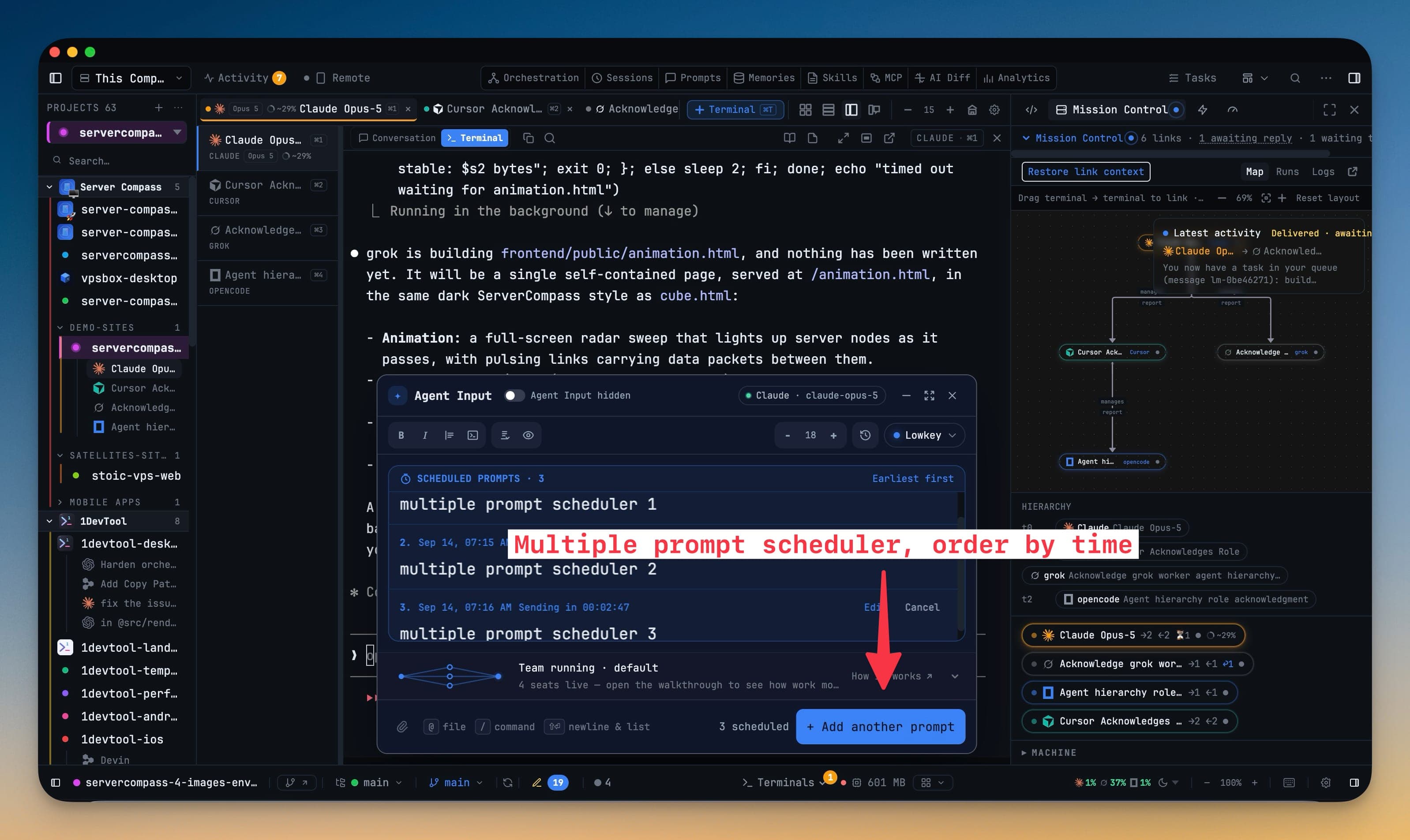
A terminal can hold more than one scheduled prompt. Schedule the next one with + Add another prompt and it joins the queue instead of replacing the prompt before it; the footer shows how many are scheduled.
The queue panel lists Scheduled prompts · N, Earliest first. Each entry shows its number, when it fires and what it is waiting on — a clock time or an agent's reset — and has two actions:
- Edit takes the prompt out of the queue and puts it back in the composer as a draft.
- Cancel removes that prompt on its own.
A failed send pauses that terminal's queue. The entry shows Delivery failed with Restore and Remove, and the panel reads Queue paused. Restore or remove the failed prompt to continue. Nothing else fires into a composer that may still hold a half-written prompt until you decide.
Waking from sleep catches up in order. Prompts that came due while the machine was asleep send one at a time, earliest first, instead of all at once.
Send to many
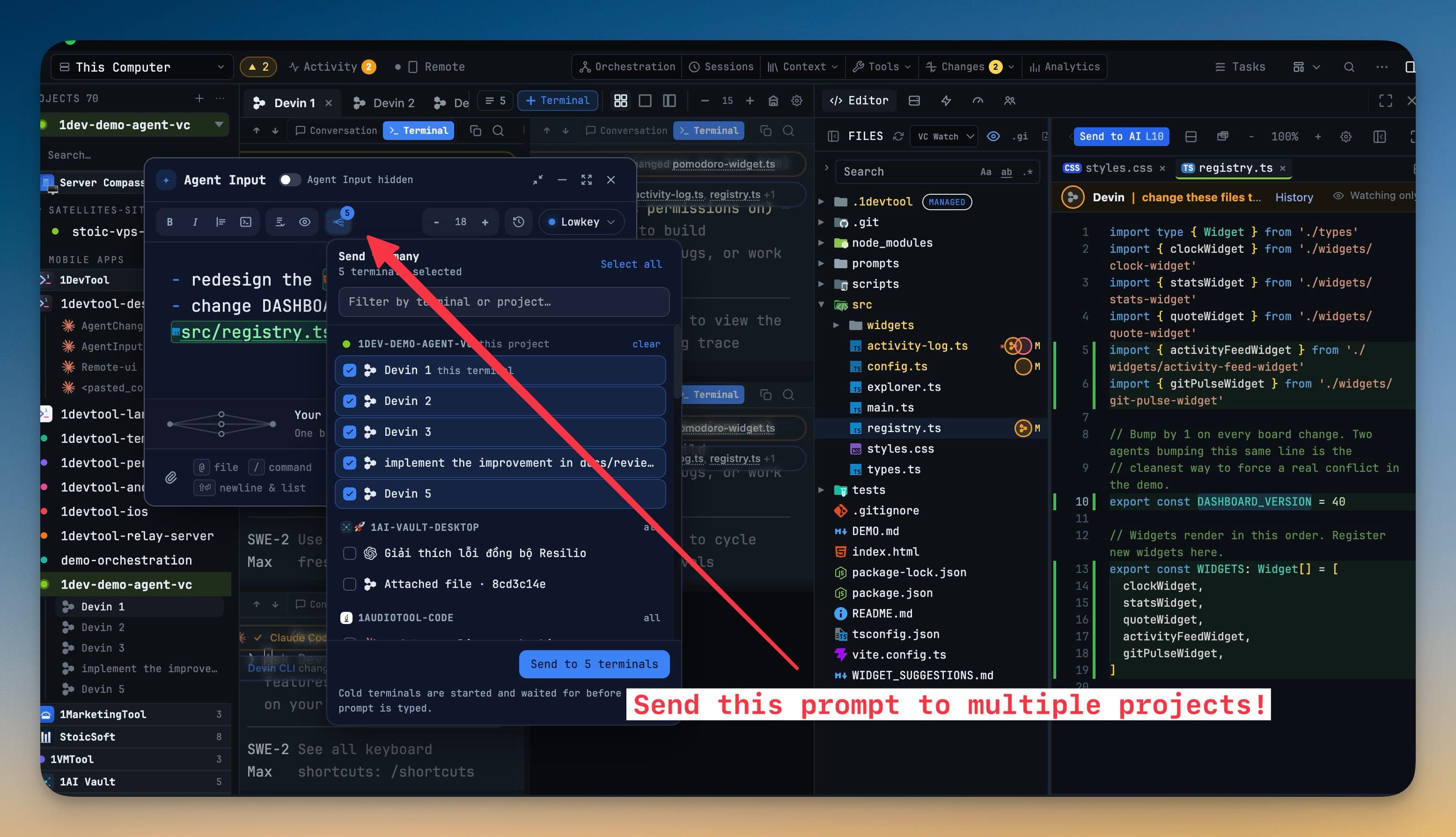
Send to many fans one draft out to every AI terminal you pick — across every project in the workspace, not just the one on screen.
Open it from the Agent Input toolbar. The picker reads Pick the agent terminals this prompt goes to and offers a Filter by terminal or project… box, Select all and Clear all. Tick a crew, then press Send to N terminals.
- Cold terminals start on their own. A tab that was only saved is launched, waited on until its composer is empty, and then typed into. It is never reported as sent if readiness failed.
- A partial send keeps your draft. Only a full success clears the composer. Failures offer a retry scoped to the terminals that missed, so a retry cannot double-send to the ones that already have it.
- Your crew is remembered. Closing the picker keeps the selection on the toolbar badge; reopen and the same terminals stay checked.
- Focus stays where you typed. A fan-out never pulls you into another project's tab while the delivery runs.
If the draft is empty the send is refused outright — Nothing to send — the draft is empty.
Prompt history
Every prompt you send is saved. Cmd+Up / Ctrl+Up scrolls back through previous prompts to reuse or edit them, and Cmd+Down / Ctrl+Down moves forward again. A prompt containing a file mention is recorded as the single prompt you actually sent, not several rows.
Related
- Prompt Templates — reusable instructions appended on send
- Linked Terminals — delivering a prompt to another agent
- Run an AI Agent
- The Builder — where the charts the mode control offers are drawn